
The Real Deadline for the Scheduled 2027 Cabinet Tariff
See which fall cabinet orders may cross the scheduled tariff increase, how entry timing changes the rate, and what your dealer should confirm.
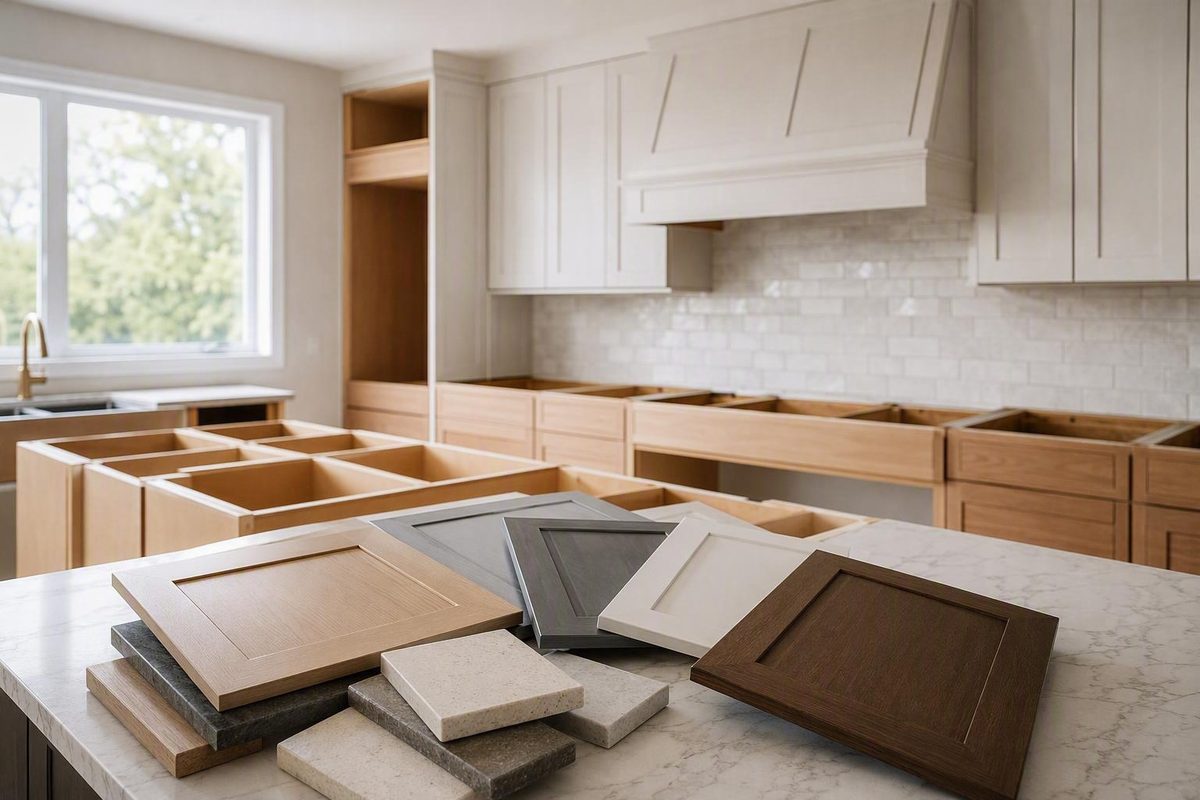
A fall 2026 cabinet order does not by itself dodge the scheduled increase from 25% to 50%. For affected imported kitchen cabinets and bathroom vanities, the relevant customs entry or warehouse-withdrawal date—not the order, deposit, factory-completion, or shipping date—may determine the Section 232 rate. Imported RTA and stock lines with lead times extending past December 2026 need attention now; U.S.-made cabinets are not subject to this import tariff, although imported components may be.
The reported standard rate remains 25% during 2026 and is scheduled to become 50% on January 1, 2027. The increase is not guaranteed or universal. A later presidential action, qualifying country agreement, product classification, origin rule, or transaction-specific customs provision could change the result.
Enter the expected order timing, origin, and covered value to estimate which side of the deadline the shipment reaches.
Estimate the customs-entry date from a fall order and compare the reported 2026 rate with the 50% rate scheduled for January 1, 2027.
Expected entry: January 10, 2027 — scheduled standard rate: 50%
This imported RTA example reaches the expected customs event after the scheduled increase. The isolated duty rises from $750 at 25% to $1,500 at 50% on a $3,000 covered customs value.
| Selection | Planner Treatment | January 2027 Result | Required Check |
|---|---|---|---|
| U.S.-made | 0% Section 232 on finished domestic cabinets | No import-duty increase on the finished boxes | Check whether imported doors, panels, or parts are separately covered |
| Canada | 25%/50% standard schedule used only as a planning assumption | Country-specific treatment may change the result | Confirm origin and any current agreement, cap, or exclusion |
| Vietnam/China RTA | 25% before the deadline; 50% scheduled on or after it | Flat packing is not assumed to create an exemption | For China, also review Section 301, antidumping, and countervailing duties |
| Other import | 25%/50% standard schedule used for planning | Actual rate can vary by origin and agreement | Confirm classification, origin, customs event, and current government action |
The price calculation assumes full pass-through of the isolated Section 232 amount. It excludes freight, brokerage, ordinary duties, Section 301, antidumping and countervailing duties, margins, installation, and tax. If “entire retail quote” is selected, the result is only an upper-bound mechanical illustration because the actual covered customs value is unknown.
The calculator treats the quoted lead time as an estimate of the customs-entry date. Confirm that assumption with the importer. A supplier’s lead time may instead end at factory completion, port arrival, warehouse receipt, or customer delivery.
Ordering in 2026 Does Not Lock the 25% Rate
Commercial cabinet guidance says tariff treatment generally turns on the relevant customs-entry or warehouse-withdrawal event. Signing a purchase order, paying a deposit, finishing production, receiving a bill of lading, or loading the cabinets onto a vessel may not preserve the earlier rate.
Consider an order placed in November 2026. The factory completes it in December, but the relevant U.S. customs event occurs after January 1, 2027. If the scheduled increase takes effect, the merchandise is covered, and no country-specific treatment applies, the shipment may receive the 50% rate. A contractor-oriented deadline guide gives the same warning about late-2026 orders.
The precise event still needs verification against the operative amendment and current U.S. Customs and Border Protection instructions. “Arrival,” “entry,” “entry for consumption,” “customs clearance,” and “withdrawal from warehouse” are not necessarily interchangeable. Bonded shipments, foreign-trade-zone transactions, warehouse entries, and goods already in transit may have distinct rules.
Inventory already entered and cleared at the earlier rate generally presents less deadline exposure than merchandise still awaiting importation. “In a U.S. warehouse” is not specific enough: goods can physically be in the country while remaining in bond or awaiting the relevant customs event.
Ask the seller to identify, in writing:
- The importer of record.
- Whether the exact inventory is already in the United States.
- Whether it has been entered and cleared or remains in bond.
- The customs event the importer believes controls the rate.
- The expected date of that event.
- The Section 232 rate included in the quote.
- Who pays if the applicable rate changes.
“Ordered before the deadline,” “ships in December,” and “on the water” do not answer those questions.
The 2027 Increase Was Postponed, Not Canceled
The reported schedule developed through four steps:
| Date | Reported Action | Cabinet Rate Effect |
|---|---|---|
| September 29, 2025 | Proclamation 10976 issued | Section 232 plan adopted |
| October 6, 2025 | Proclamation published | Appeared at 90 FR 48127 |
| October 14, 2025 | Cabinet measure began | 25% reported effective |
| January 1, 2027 | Postponed increase date | 50% scheduled |
The original October 2025 presidential document addressed timber, lumber, and derivative wood products under Section 232. Commercial guidance identifies October 14, 2025 as the effective date for the 25% tariff on covered kitchen cabinets and vanities.
The original schedule called for that rate to rise to 50% on January 1, 2026. A December 31, 2025 action deferred the increase for one year. The January 9, 2026 Federal Register amendment corresponds to that change, while a trade-law analysis of the postponement describes the higher rate as delayed rather than canceled.
A separate January 2026 tariff summary reports that affected cabinets and vanities remain at 25% during the postponement and are scheduled to reach 50% on January 1, 2027. It also says covered products from countries reaching qualifying agreements with the United States would not face the increase.
That history explains conflicting headlines. An older report may still identify January 1, 2026 as the increase date. A later report should account for the one-year postponement.
FederalRegister.gov says its XML presentation is informational and directs legal researchers to verify documents against the official Federal Register edition on govinfo.gov. Anyone making a consequential importing or purchasing decision should review the complete amendment, annex, current Harmonized Tariff Schedule provisions, and current CBP instructions.
Imported RTA, Stock Cabinets, and Vanities Are the Main Exposure
Secondary legal and commercial sources describe the measure as covering certain imported completed kitchen cabinets, bathroom vanities, ready-to-assemble units, and parts intended for covered cabinets or vanities. A commercial 2026–2027 cabinet tariff guide says covered assembled and RTA cabinets receive the same Section 232 treatment.
Flat-packed construction therefore should not be treated as an exemption. Nor does an assembled product automatically fall within the measure. Coverage depends on the operative tariff language, classification, materials, construction, condition at importation, intended use, and other customs facts.
The practical exposure differs by supply chain:
| Cabinet Source | Deadline Exposure | What to Verify |
|---|---|---|
| U.S.-made boxes | Not imported as finished boxes | Origin of doors and parts |
| Imported RTA | Potentially covered | Entry date and classification |
| Imported stock line | Depends on inventory status | Already cleared or still in bond |
| Imported vanity | Potentially covered | Product scope and origin |
A cabinet assembled in the United States can still contain imported doors, panels, hardware, or other components. Whether those components are separately covered cannot be determined from a “Made in USA” showroom label alone.
Country of shipment is also not necessarily country of origin. Cabinets can be manufactured in one country, use components from another, travel through a third, and enter the United States from a fourth. Importers should retain records supporting the manufacturer, production steps, component sourcing, classification, and claimed origin.
Canada and Other Origins Require Country-Specific Verification
The 50% figure is a scheduled standard rate, not a universal rate for every foreign cabinet. Product classification, country of origin, qualifying trade arrangements, customs timing, and later government action can all affect treatment.
The original proclamation described rates no higher than 15% for qualifying covered wood products originating in the European Union and Japan, subject to its terms. That should not be paraphrased as an automatic exemption for every shipment dispatched from an EU country or Japan. The goods must satisfy the relevant product and origin requirements, and the applicable arrangement must still be in force.
The supplied evidence does not establish a single cabinet rate that can safely be assigned to every Canadian shipment. A Canadian-origin order is imported merchandise, but the importer must verify whether a current agreement, cap, exclusion, or other condition changes the standard treatment.
Vietnamese- and Chinese-origin RTA cabinets should be checked against the same Section 232 schedule unless the importer identifies applicable alternative treatment. Chinese-origin merchandise needs an additional review because antidumping, countervailing, Section 301, or other duties may apply. A contractor tariff overview warns that some Chinese cabinet merchandise may face antidumping and countervailing duties in addition to Section 232.
No universal combined rate is supported by the supplied evidence. Treatment can depend on the current order scope, producer or exporter, classification, origin, deposit instructions, and other transaction facts.
A 50% Duty Does Not Mean a 50% Retail Increase
The Section 232 percentage applies to the qualifying customs value, not automatically to the full retail cabinet proposal. On a covered customs value of $3,000, a 25% duty is $750 and a 50% duty is $1,500. The isolated difference is $750.
| Section 232 Rate | Duty on $3,000 |
|---|---|
| 25% | $750 |
| 50% | $1,500 |
| Difference | $750 |
That example excludes ordinary customs duties, Section 301 duties, antidumping or countervailing duties, brokerage, freight, insurance, storage, domestic delivery, seller margin, installation, and sales or use tax.
A retail proposal may also include design, measurement, hardware, fillers, trim, decorative panels, demolition, installation, and other work that is not the imported customs value. The final customer price therefore does not automatically double when a duty rate moves from 25% to 50%.
The seller may absorb part of a duty increase, pass it through, or change pricing for other commercial reasons. Ask the dealer to distinguish among customs value, landed cost, and customer price. If the customs value is unavailable, an estimate based on the entire retail quote is only a mechanical upper-bound illustration, not a reliable price forecast.
Imported Lines Crossing December Need Written Price Terms
Imported cabinet lines with quoted lead times extending into January are the orders to resolve first. Merely placing them early does not lock the customs rate. A meaningful lock requires either already entered inventory or contract language allocating the risk if the rate changes.
The proposal should state:
- The manufacturer and claimed country of origin.
- Whether the exact inventory has entered and cleared.
- The expected customs-entry or withdrawal date.
- The Section 232 rate assumed in the price.
- The basis for any country-specific cap or alternative treatment.
- Whether other duties are included.
- Whether the seller can reprice after acceptance.
- Who bears an increase and who receives a decrease.
- What documentation is required before a tariff adjustment is charged.
Compare complete proposals on the same scope, including cabinet boxes and doors, finished ends, panels, moldings, fillers, toe kicks, hardware, accessories, freight, delivery, installation, taxes, tariff assumptions, change-order terms, and replacement lead times.
Domestic cabinets are not automatically cheaper, and imported cabinets are not automatically a worse buy. The relevant comparison is the complete installed proposal and the amount of unresolved tariff exposure. An imported stock line already entered and cleared may carry less timing risk than a supposedly domestic line waiting on covered imported components.
Recheck the Schedule Before Entry
The scheduled increase could still be amended, delayed, reduced, or superseded. Before relying on the January 1 date, review the latest presidential action, current HTSUS provisions and notes, CBP implementation instructions, country agreements, and any overlapping trade-remedy orders.
MasterBrand’s August 4, 2026 earnings coverage said the company considered a potential January 2027 increase to 50% in its planning. That point appears in an AI-generated takeaway on the supplied earnings-report page, and the detailed underlying discussion is not fully available there. Corporate planning shows that the deadline is commercially relevant; it does not prove that the government will leave the schedule unchanged.
The buying decision is narrower: if an affected imported line may not reach its governing customs event until January 2027, obtain a documented entry estimate and tariff clause now. If the seller cannot identify the inventory’s customs status or the rate assumed in the quote, treat the price as subject to change.