
How to Choose a Cabinet Finish Without Trusting the Label Alone
For DIY in an occupied home, a waterborne cabinet enamel approved for brushing or rolling may be more practical than solvent lacquer requiring spray.
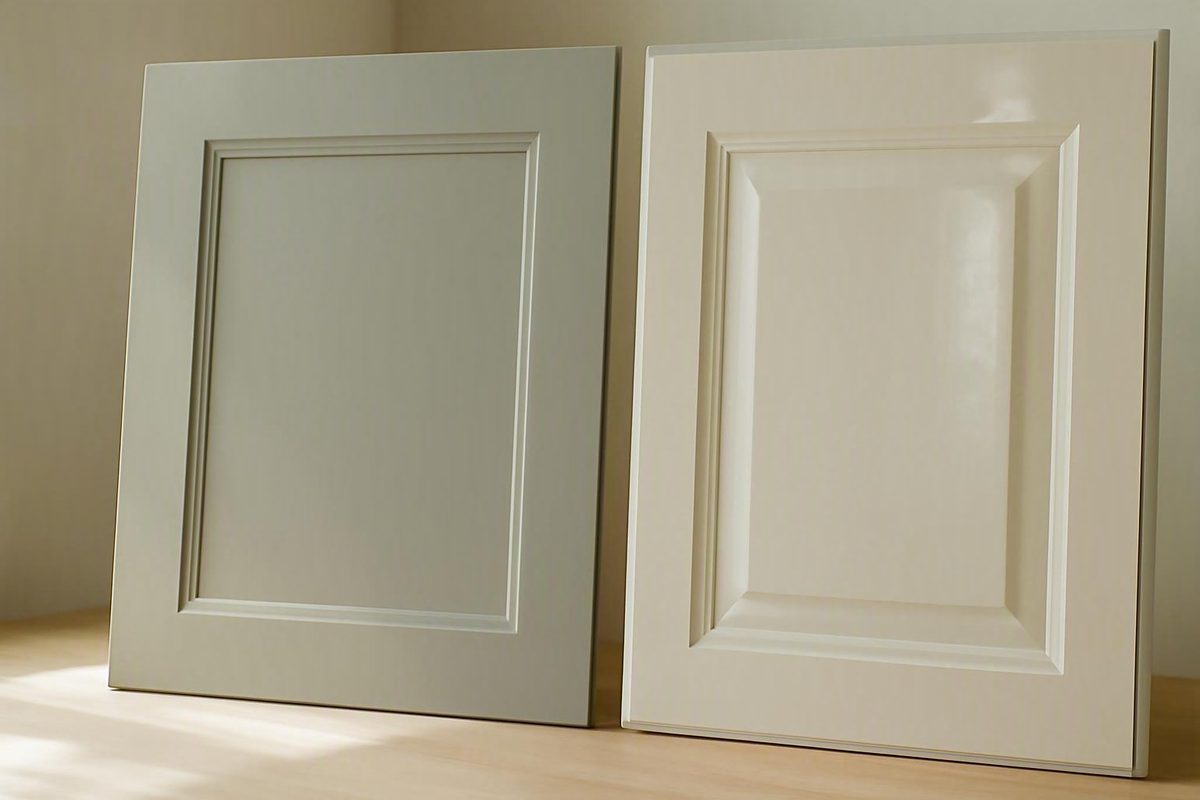
The short answer: lacquer is faster, but enamel may be more practical
In a traditional lacquer-versus-enamel comparison, lacquer generally forms its film through rapid solvent evaporation. That helps explain why lacquer is associated with fast spray production and rapid recoating, while enamel is often selected for a hard, cleanable finish after a longer cure. One general overview defines traditional lacquer as a quick-drying coating associated with nitrocellulose resin while acknowledging that “enamel” can include oil-, latex-, and water-based products—evidence that neither label identifies one uniform formula in its comparison of lacquer and enamel.
Lacquer is commonly sprayed and can produce a smooth finish quickly.
Neither category is automatically more durable. Results can change with the named formula, catalyst or hardener, substrate, cleaning and sanding, primer, film thickness, application conditions, cure time, and exposure after installation. A purpose-built waterborne cabinet enamel can be a better fit than an unsuitable lacquer; a professionally applied pre-catalyzed lacquer system can be a better fit than a poorly prepared enamel job.
This article is therefore a selection framework, not a technical specification for every lacquer or enamel. The available evidence supports broad orientation, but it does not include current technical data sheets, standardized cabinet-finish tests, or safety documents for the product in your hand. Final instructions must come from the selected product’s current documentation.
For cabinets, begin with the working environment:
- A homeowner working inside an occupied house may find a compatible waterborne cabinet enamel designed for brushing or rolling more practical.
- A professional spray shop may consider pre-catalyzed lacquer or another documented cabinet-finishing system when production speed, spray quality, and controlled application matter.
- A project with an unknown existing finish needs compatibility research and a representative test before either category is selected.
- A pale kitchen makes color stability an important comparison point.
- A heavily used sink cabinet requires documented moisture performance, not a general reputation for hardness.
Compact verdict
Situation Likely direction What still needs verification DIY or occupied home Purpose-built waterborne cabinet enamel may be more practical Approved primer, application method, cure before reassembly, cleaner and moisture resistance Professional spray work Pre-catalyzed lacquer or another shop-grade system may suit rapid production Catalyst or hardener, film-build limits, cure, resistance data, repair method Unknown existing finish Neither category is automatically suitable Existing coating, approved primer or removal method, complete test panel Plastic models Use a model-specific compatible system Plastic safety, undercoat compatibility, thinner, cure, test on scrap Modern automotive refinishing Start with a current automotive refinishing system Substrate, complete system, equipment, cure, and manufacturer procedure
The useful question is not simply “lacquer or enamel?” It is: Which named primer-and-topcoat system is documented for this substrate, application method, environment, and exposure profile?
Why the names lacquer and enamel do not tell the whole story
Traditional lacquer can be described relatively narrowly as a solvent-borne, quick-drying coating commonly associated with nitrocellulose resin. Modern product language is broader. Acrylic lacquer, pre-catalyzed lacquer, waterborne lacquer, and lacquer-like finishes may differ substantially in their application, curing, compatibility, and resistance.
“Enamel” is less precise still. Historically, the word suggested paint that developed a hard, smooth finish. A contractor’s cabinet guide compares water-based, oil-based, and “lacquer-based enamel,” illustrating how commercial language can blur what appears to be a clean two-category divide in its overview of cabinet enamels.
The phrase lacquer-based enamel is not proof that lacquer and enamel are interchangeable. It is a reason to investigate the actual binder, solvent or carrier, and hardening mechanism. A marketing term may describe appearance or intended use rather than one standardized chemistry.
The word acrylic also needs qualification. In a model-finishing discussion, contributors point out that acrylic identifies binder chemistry and does not necessarily mean water-based. The thread also records products sold under similar category labels but requiring different thinners, reinforcing the need to consult the named product rather than infer compatibility from “acrylic” alone in the FineScale Modeler discussion.
Catalysis creates another important distinction, but the terminology is product-specific:
- A one-part coating does not require the user to add a separate component.
- A multi-component product may use a catalyst, hardener, or crosslinking component according to its manufacturer’s terminology.
- “Catalyzed” does not automatically mean lacquer.
- A one-part enamel should not be assumed to behave like a catalyzed or urethane-modified coating.
Conversion varnish and urethane systems are often discussed beside lacquer and enamel because they compete for some of the same cabinet, furniture, or automotive work. Similar use does not establish identical chemistry or interchangeability.
A label-reading checklist
Before comparing two cans—or two cabinet-finishing quotes—record:
- Exact product name and current formula
- Resin or binder, if disclosed
- Waterborne or solvent-borne status
- One-part or multi-component system
- Purpose of any catalyst, hardener, or crosslinker
- Approved substrates
- Approved application methods
- Required or recommended primer
- Surface-preparation instructions
- Minimum and maximum recoat windows
- Handling and full-cure schedule
- Required application conditions
- Recommended wet- and dry-film thickness
- Maximum total film build
- Approved clear coat, if any
- Restrictions involving existing coatings
- Cleaning and maintenance instructions
A useful technical document should let you locate those details directly. If it does not state resistance to pooled water, alcohol, or a particular cleaner, do not convert silence into an assumed approval. Ask the manufacturer or a qualified finisher whether additional documentation exists.
Drying, recoating, and curing are different milestones
“Dry” is not one event. A coating can feel dry while remaining too soft to sand, stack, reinstall, clean, or expose to water.
Use four separate milestones:
- Touch-dry: Light contact no longer visibly marks or transfers the coating under the specified conditions.
- Ready to recoat: The next approved coat can be applied within the stated window.
- Ready to handle or reassemble: Doors can tolerate the specific movement, hardware installation, or hanging operation described by the manufacturer.
- Fully cured or hardened: The coating has reached the manufacturer’s stated point for expected service or testing.
Traditional lacquer loses solvent rapidly and may permit several coats within a relatively short production schedule. That speed is valuable in a controlled spray environment, where reducing the time each coat remains exposed can improve production efficiency.
Fast evaporation does not prove maximum hardness, adhesion, or resistance to water, alcohol, grease, or cleaners. A catalyzed product may likewise have a fast initial dry but a longer chemical-cure schedule.
On cabinets, that contact can occur around bumpers, overlapping edges, drying racks, and stacked doors.
Participants in a professional painting forum specifically report that wet-film thickness can change apparent drying behavior, although their observations concern particular cabinet products rather than controlled category-wide testing in this cabinet-finishing discussion.
Do not schedule a project around informal claims that all lacquer dries within one short period or all enamel requires a particular number of hours. Category-wide numbers conceal differences among formulas and application conditions.
Build the timeline from the selected product
| Touch-dry | Recoat | Handling or reassembly | Full cure |
|---|---|---|---|
| Copy the stated time and required conditions | Record the minimum and maximum window, preparation requirements, and conditions | Record when doors may be turned, stacked, drilled, fitted, or rehung | Record when normal cleaning, moisture exposure, and regular service are allowed |
For each coat, record the date, time, temperature, humidity if required, application method, and any catalyst or hardener details. If the manufacturer supplies different schedules for different conditions, retain those qualifications.
A cabinet door should not be rehung simply because it no longer feels tacky. Use the documented handling or reassembly milestone rather than touch-dry as the governing point.
Durability is a scorecard, not a single ranking
Asking which finish is “more durable” compresses several independent properties into one word. A useful comparison scores each named product against the project’s actual exposures.
The durability categories that matter
- Scratch and abrasion resistance: Response to rubbing, fingernails, utensils, and repeated wiping
- Impact and chip resistance: Response when cookware, jewelry, a vacuum, or an adjacent door strikes an edge
- Moisture resistance: Response to humidity, splashes, and wet hands
- Standing-water tolerance: Performance when water remains at a seam or edge
- Grease and cleaner resistance: Response to cooking residue and repeated household cleaning
- Alcohol and solvent resistance: Relevant around beverages, disinfectants, cosmetics, and stronger cleaners
- Heat resistance: Relevant near ovens, ranges, lighting, and heat-producing appliances
- Color retention and yellowing: Especially visible on white, cream, and pale gray cabinets
- Adhesion: Ability to remain attached to the selected primer or substrate
- Repairability: How successfully a chip or worn edge can be touched up or blended
A product’s documentation may describe one without establishing the other. Likewise, a coating promoted as “durable” may not provide separate evidence for pooled water, alcohol, or household cleaners.
Broad editorial and contractor comparisons often characterize enamel as hard-curing and cleanable. Cabinet forum participants sometimes favor pre-catalyzed lacquer for rapid application, smooth spraying, and touch-up. Those observations identify useful questions, but they do not establish a universal winner.
Kitchen cabinets have a distinctive exposure profile: fingerprints, airborne grease, repeated wiping, damp towels, sink splashes, edge impacts, and occasional contact with alcohol or household chemicals. A finish suitable for a decorative bookcase is not automatically suitable beside a sink.
One Houzz commenter reported bubbling after water remained pooled on professionally finished cabinetry for several days. That is an unverified personal account, not evidence of a failure rate or a reason to condemn an entire coating category. It does illustrate why “professional finish” should not be interpreted as immunity from prolonged water exposure in the cabinet-finish discussion.
Yellowing deserves a separate comparison row. The supplied contractor and forum sources report yellowing as a concern associated with some oil-based cabinet paints, but they do not establish how every formula will behave. For white or pale cabinets, request product-specific color-stability information rather than assuming that every oil-based coating will change equally or that every waterborne coating will remain unchanged.
A meaningful comparison holds preparation, primer, substrate, film thickness, cure conditions, and evaluation method as constant as possible. Comparing a fully cured shop-applied catalyzed system with a recently rolled DIY coating mainly compares process and age, not lacquer with enamel.
Product-comparison worksheet
| Exposure or property | Manufacturer-stated resistance | Test or evaluation method supplied? | Cure condition for claim | Homeowner priority |
|---|---|---|---|---|
| Scratching and abrasion | High / medium / low | |||
| Edge impact and chipping | ||||
| Water splashes | ||||
| Pooled water | ||||
| Grease | ||||
| Routine cabinet cleaner | ||||
| Alcohol | ||||
| Stronger household chemicals | ||||
| Heat | ||||
| Yellowing or color change | ||||
| Adhesion to selected primer | ||||
| Touch-up and blending |
A blank entry does not prove poor performance. It means the property has not been verified and should not be promised.
Application quality depends on the whole coating system
Traditional and pre-catalyzed lacquers are closely associated with spray application and fast production. Many cabinet enamels are designed for brushing, rolling, spraying, or more than one method. This is a broad pattern, not permission to use any product by any method.
The visible result depends on the complete workflow:
- Removing grease, wax, polish, silicone residue, and other contamination
- Rinsing when the selected cleaning system requires it
- Sanding or otherwise deglossing as directed
- Repairing dents, damaged edges, and open joints
- Applying a documented primer
- Using approved equipment and thinning limits
- Applying the specified film thickness
- Managing leveling, runs, sags, and edge buildup
- Controlling dust and overspray
- Sanding between coats when directed
- Applying an approved clear coat when the system calls for one
- Respecting maximum total film build
- Delaying reassembly until the handling stage
- Delaying normal service until the required cure stage
The easier coating is therefore the one matched to the application method, equipment, and environment—not necessarily the fastest or slowest product.
Repairability should be considered separately from initial durability. Cabinet finishers sometimes value lacquer systems because an approved repair coat may blend with the existing film. The available forum evidence treats this as a system-specific practical advantage, not a property proven for every lacquer. The repair procedure should come from the manufacturer or installer.
Participants in the professional painting forum emphasize cleaning, rinsing where required, deglossing, priming, controlling film thickness, and allowing adequate cure. They also report different outcomes with particular primer-and-topcoat combinations, including conflicting fish-eye experiences. Those are product anecdotes, not proof that an entire primer or coating category is unsuitable.
For an apples-to-apples trial, prepare two representative doors or panels the same way. Apply each complete documented primer-and-topcoat schedule, use the specified thickness where supplied, and cure both under equivalent conditions. If the manufacturer provides no approved adhesion, water, cleaner, or chemical evaluation procedure, ask for guidance rather than improvising a destructive test.
Can lacquer go over enamel? Use a compatibility workflow, not a rule of thumb
There is no reliable category-wide rule that lacquer can—or cannot—go over every enamel. The reverse is also true. Modern labels cover too many combinations for a simple universal layering chart.
Model-finishing contributors commonly describe lacquer solvents as “hotter” or more aggressive than enamel solvents and warn that some combinations can disturb an undercoat or craze plastic. The same discussion contains conflicting experiences: some contributors discourage lacquer over acrylic or enamel, while others report success with particular products and light initial coats. Because these are user reports about model paints, they demonstrate uncertainty rather than establishing a cabinet-finishing rule.
They do not guarantee adhesion, long-term compatibility, or substrate safety.
A safer compatibility workflow
- Identify the substrate. Determine whether it is solid wood, veneer, MDF, metal, plastic, laminate, or another material.
- Identify the existing coating when possible. Use project records, the original manufacturer, or the previous contractor rather than a destructive guess.
- Select a documented combination. Confirm compatibility among the exact cleaner, primer, topcoat, catalyst or hardener, and clear coat.
- Read current product documents. Check preparation, application, recoat windows, film-build limits, cure, and substrate restrictions.
- Observe the stated windows. Some products require recoating within a specified period or additional preparation after it passes.
- Create a representative sample panel. Match the real substrate and existing finish as closely as practical.
- Apply the complete schedule. Include cleaning, sanding, primer, color coats, added components, and clear coat where specified.
- Allow the stated cure. Do not judge compatibility only at touch-dry.
- Evaluate only by an approved method. Follow the manufacturer’s documented adhesion or exposure procedure and required cure condition.
- Escalate unanswered questions. Contact the manufacturer or a qualified coatings professional if no approved evaluation method is supplied.
Stop if the sample develops:
- Wrinkling
- Lifting
- Crazing or fine cracking
- Softening
- Discoloration
- Loss of adhesion
- Unexpected gloss change
- Bubbling
- Persistent tackiness
Do not treat a lacquer-thinner rub test as a safe or definitive way to identify an unknown finish. The supplied DIY source mentions such an approach but does not provide enough product-specific or safety guidance to support it as a general recommendation. A reaction would not necessarily identify the exact resin or prove what can be applied next.
An unknown existing finish raises project uncertainty. An explicitly approved primer may be suitable in one documented system; removal may be preferable in another. Choose between those routes using current instructions and a successful representative test, not a rule that one category always seals another.
Lacquer vs enamel for kitchen cabinets
Cabinet decisions become clearer when divided into three real-world scenarios.
Professionally finished new cabinets
Cabinet forum participants discuss pre-catalyzed lacquer favorably because it can support rapid production and smooth spray application. Their reports do not prove that it is more durable than every enamel or professional finishing system.
For new cabinets, ask what the complete system is designed to provide. The answer should identify:
- Substrate
- Sealer or primer
- Color coats
- Catalyst, hardener, or crosslinker
- Clear coat, if used
- Film-build limits
- Cure before packaging and installation
- Touch-up procedure
Pay particular attention to sink-base edges, dishwasher-adjacent panels, door corners, trash pull-outs, and frequently handled knobs or pulls. A pristine sample door does not by itself demonstrate resistance to pooled water or repeated cleaning.
Professional on-site or shop refinishing
A refinisher must solve a different problem: adhesion to an existing surface. The old coating may carry grease, polish, wax, silicone, or incompatible repairs. Doors may be removed and sprayed in a shop while frames are prepared and coated in the home.
The strongest proposal is not the one with the most impressive category name. It is the one that documents cleaning, abrasion, primer selection, application controls, film thickness, cure, reinstallation, and repair.
Shop conditions may make a fast-drying spray system attractive. On-site conditions may favor a product designed for the available application method. Using materials from different product lines is not automatically wrong, but compatibility among the exact components should be documented rather than assumed.
Homeowner DIY refinishing
For an occupied-home DIY project, a purpose-built waterborne cabinet enamel approved for brushing or rolling may be more practical than a solvent lacquer requiring spray application and tighter process control. “More practical” does not mean universally tougher or inherently safe. It means the application method and working requirements may be easier to accommodate when the product is designed for that use.
Oil-based cabinet enamel is commonly associated in the supplied contractor and forum material with smooth leveling and a durable finish, while slow drying and possible yellowing recur as concerns. Treat those as questions to verify for the named formula.
Waterborne enamel should not be dismissed as categorically less durable. Participants in a professional painting forum report materially different results among named products, primers, colors, film thicknesses, application methods, and cure periods. Those anecdotes cannot rank the category, but they show why the exact formula matters.
Products marketed as waterborne enamel, oil-based enamel, and lacquer-based enamel should therefore be compared as distinct systems. Sharing the word “enamel” does not make their schedules, resistance, or application requirements equivalent.
Cabinet-specific questions to answer
Before selecting a system, verify:
- Adhesion to the existing surface or chosen primer
- Grease and routine-cleaner resistance
- Splash and standing-water tolerance
- Alcohol resistance
- Yellowing or color-stability expectations
- Resistance to sticking at bumpers and contact points
- Edge and chip repair procedure
- Time before hardware installation
- Time before doors can be rehung
- Time before normal cleaning and kitchen use
Ask a cabinetmaker or painter to identify:
- Exact topcoat and primer
- Purpose of each coat
- Whether a catalyst, hardener, or crosslinker is used
- Number of coats and target thickness
- Maximum total film build
- Cure before installation
- Available resistance data for water, alcohol, grease, and common cleaners
- Expected behavior of white and pale colors
- Touch-up method
- Application-control plan
- Written warranty terms and exclusions
Cabinet decision table
| System | Typical application setting | Downtime | Process burden | Color-stability concern | Repair approach | Evidence to verify |
|---|---|---|---|---|---|---|
| Professional sprayed lacquer system | Controlled shop or appropriately managed spray setting | Often selected for rapid recoating, but installation still depends on specified cure | Product-specific equipment and environmental controls | Ask about yellowing and clear-coat behavior | May permit system-specific blending or recoating | Primer, catalyst, film build, cure, water/alcohol/cleaner resistance |
| Oil-based cabinet enamel | Brush, roll, or spray where the product permits | May need extended protection from dust and handling while hardening | Confirm application, cleanup, and work-area requirements | Possible yellowing is an important question for pale colors | Usually localized touch-up, with visibility affected by age and sheen | Recoat, contact-point performance, cure, cleaner resistance, color retention |
| Waterborne cabinet enamel | Often practical for occupied-home brushing, rolling, or spraying | Initial dry may precede full hardness; verify reassembly timing | Product-specific application and work-area requirements | Often considered for pale colors, but formula-specific evidence is still needed | Product-specific touch-up or recoating | Approved primer, adhesion, thickness, cure, moisture and chemical resistance |
No forum-mentioned brand should be treated as an endorsement. Formulas and documentation can change, and a favorable account does not establish performance on another substrate or project.
Furniture, plastic models, and cars need different answers
Cabinet conclusions should not be transferred automatically to furniture, models, or automobiles. The substrate, scale, use, appearance standard, and available coating systems all change the decision.
Furniture
Lacquer has a longstanding association with sprayed furniture finishing. Rapid application and system-specific repair characteristics can be valuable in production. For a dining table, however, resistance to moisture, alcohol, and cleaning may matter more than production speed. For decorative furniture, appearance and repairability may carry more weight.
Solid wood, veneer, MDF, laminate, and an existing finish create different preparation and adhesion questions. Choose the named furniture system according to the substrate and intended use, not tradition alone.
Plastic models
Plastic models are particularly sensitive to coating compatibility. Model-forum participants warn that aggressive lacquer solvents may craze plastic or disturb an acrylic or enamel undercoat, while also reporting successful exceptions with particular products.
Use a model-specific compatible system, allow the documented cure between stages, and test the full sequence on scrap sprue or a representative sample. Do not rely on a universal lacquer-over-enamel matrix.
Modelers sometimes separate solvent systems—for example, using an enamel wash over a cured acrylic base in an effort to avoid disturbing the color coat. That is anecdotal, product-specific practice. The base, wash, thinner, clear coat, and plastic still need to be evaluated together.
Automotive work
The supplied historical sources describe traditional automotive lacquer as fast-drying but potentially labor-intensive because some applications use repeated coats, sanding, and final polishing. They also describe a preference for catalyzed urethane systems over traditional lacquer or enamel.
That evidence consists of a 2008 automotive forum and a general article reviewed in 2019, so it does not establish current automotive-industry practice in 2026. It does show why a modern project should begin with current documentation from an automotive refinishing-system manufacturer rather than household lacquer-versus-enamel guidance in the archived automotive discussion.
Do not convert forum comments about solid colors, metallic colors, coat counts, or polishing into universal instructions. The current refinishing system should govern substrate preparation, primers, color coats, clear coats, added components, equipment, cure, and work controls.
Project matrix
| Project | Main decision drivers | Why one universal winner fails |
|---|---|---|
| Kitchen cabinets | Existing finish, grease, water, cleaners, contact points, color stability, edge repair, application setting | Shop production and occupied-home practicality reward different properties |
| Furniture | Substrate, alcohol and water exposure, appearance, repairability, brushing or spraying | Decorative and high-use furniture have different exposure profiles |
| Plastic models | Plastic safety, undercoat compatibility, fine-film control, decal and wash sequence | Solvent strength and product-specific chemistry can reverse layering advice |
| Cars | Current automotive-system compatibility, substrate, color system, equipment, restoration goals | Automotive refinishing systems are not equivalent to household lacquer or enamel |
A final selection and safety checklist
Use this sequence before buying either finish:
- Identify the substrate and existing coating. Record wood species, veneer, MDF, laminate, metal, plastic, and all known previous finishes.
- Define the likely exposures. Include water, grease, alcohol, cleaners, abrasion, impact, heat, sunlight, and contact between coated parts.
- Choose a realistic application method. Decide whether the project can support brushing, rolling, spraying, or professional shop finishing.
- Compare exact products. Do not compare category names alone.
- Confirm component compatibility. Match cleaner, primer, catalyst or hardener, color coat, and clear coat where applicable.
- Record every time milestone. Separate touch-dry, recoat, handling, reassembly, and full cure.
- Verify film-build limits. More coating should not be assumed to provide more protection.
- Test the complete schedule. Use a representative substrate and existing finish.
- Document touch-up. Keep the product identity, color formula, sheen, batch information when available, and approved repair steps.
- Plan the complete project cost. Account for cleaner, abrasives, primer, added components, thinner, clear coat, application equipment, protective equipment, polishing supplies, labor, and cure-related downtime.
The evidence supplied for this article does not include an authoritative safety data sheet, occupational standard, fire code, or disposal rule for a selected product. It therefore cannot establish ventilation rates, protective equipment, ignition controls, storage methods, cleanup procedures, or disposal requirements.
Before opening or applying a coating, consult the exact product’s current label and safety data sheet, the application-equipment instructions, and applicable local requirements. Do not select a respirator cartridge, ventilation setup, or disposal method from a generic lacquer-versus-enamel comparison.
Stop and reassess if:
- The existing coating cannot be identified and no documented preparation or primer route is available.
- The work area cannot meet the selected product’s stated application requirements.
- Primer and topcoat documentation conflict.
- A test panel wrinkles, lifts, crazes, softens, discolors, bubbles, loses adhesion, or remains tacky.
- Required temperature, humidity, airflow, component mixing, or film thickness cannot be maintained.
- The installer will not identify the products or explain cure, maintenance, and touch-up.
- Current safety documents or applicable requirements cannot be obtained or followed.
There is no defensible category-wide winner in lacquer vs enamel. For cabinets, choose the complete documented system that fits the substrate, application setting, equipment, cure window, color requirements, and likely exposure to moisture, grease, cleaners, alcohol, abrasion, and impact. Choose the verified coating system that fits the project, not the category name with the strongest reputation.
Frequently asked questions
Is lacquer more durable than enamel on kitchen cabinets?
Not as a universal rule. A pre-catalyzed lacquer may perform well when correctly applied over an approved substrate and primer, while a purpose-built cabinet enamel may be a better fit in another setting. Preparation, primer, added components, film thickness, cure, moisture resistance, chemical resistance, and use conditions can change the result.
Compare named products for scratching, edge impact, pooled water, grease, alcohol, routine cleaners, color change, contact-point sticking, and repairability. Also compare the time required before doors can be reinstalled and returned to normal service.
Can lacquer be applied over enamel paint?
Sometimes a particular lacquer may be documented for use over a particular cured enamel, but there is no reliable category-wide rule. Some lacquer solvent systems may disturb an underlying coating, and apparent short-term success does not establish long-term adhesion.
Use a documented combination and test the complete cleaning, preparation, primer, lacquer, and clear-coat schedule on a representative sample. Light initial coats are not a substitute for compatibility documentation.
Does lacquer dry faster than enamel?
Traditional lacquer generally loses solvent rapidly and often permits faster recoating than many enamels. That does not mean every lacquer follows the same schedule or that rapid touch-dry equals full hardness or resistance.
Check four separate milestones for the selected product: touch-dry, recoat, handling or reassembly, and full cure. Application thickness and stated environmental conditions must remain attached to those times.
Can lacquer and enamel both be brushed or sprayed?
Products in both categories may be sold for different application methods, but not every product supports every method. Lacquer is commonly associated with spraying, while many cabinet enamels are designed for brushing, rolling, spraying, or a combination.
Follow the exact product’s instructions for application method, equipment, thinning, film thickness, and recoating. Do not assume that one product can be brushed or sprayed merely because another product with the same category label allows it.
Should a modern automotive project use lacquer or enamel?
A current purpose-built automotive refinishing system is the better starting point than a broad household choice between lacquer and enamel. The supplied historical sources favor urethane-based systems and describe traditional lacquer as potentially requiring repeated coating, sanding, and polishing, but they are not current enough to establish 2026 industry practice.
Restoration goals may change the decision. In every case, use current automotive-system documentation for the substrate, primer, color coat, clear coat, added components, equipment, cure, and required work controls.