
Choose Melamine Plywood by Its Core, Finish, and Edges
Compare melamine plywood cabinet specifications, distinguish TFL from HPL, and check core construction, finished edges, moisture limits, and upgrade quotes.
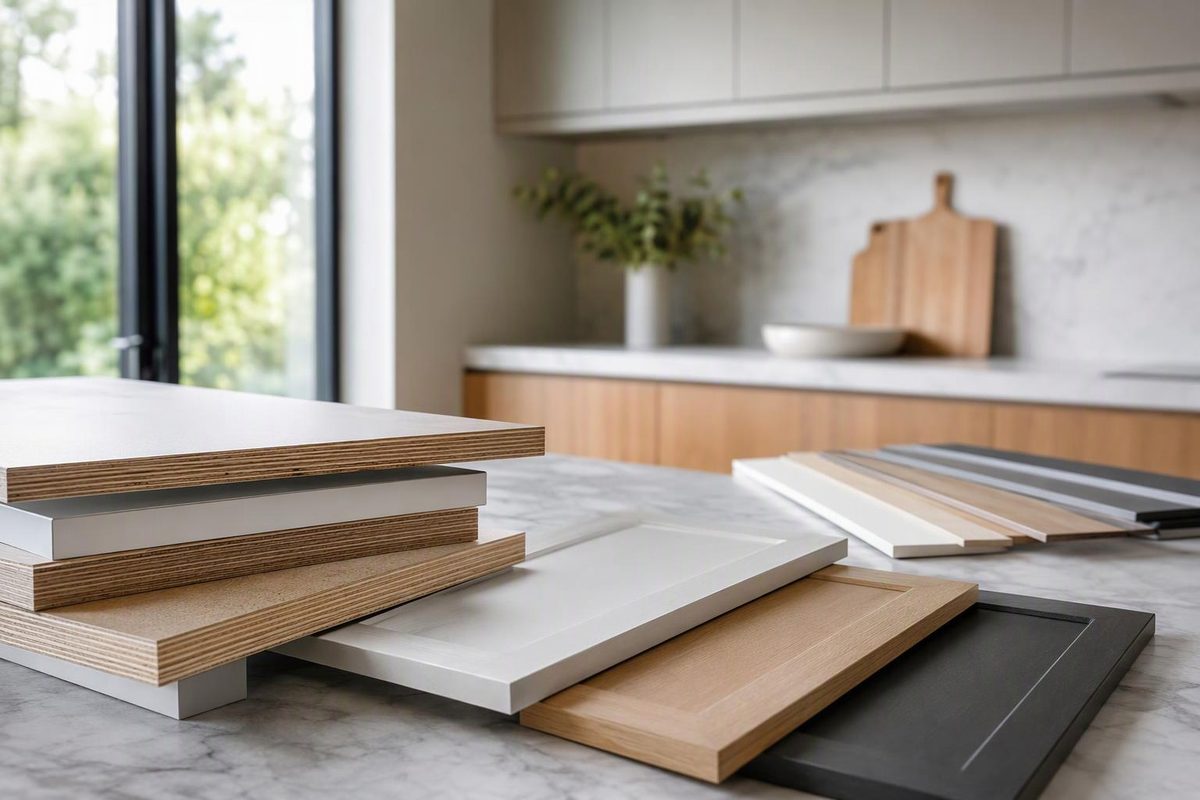
Melamine plywood generally means a plywood-based panel sold with a melamine decorative surface. It can be a sensible choice for kitchen cabinet boxes when you want a finished interior rather than visible natural wood. Buy it by the documented panel construction, not the label: “melamine plywood” alone does not establish the core, surface type, shelf performance or protection against water.
Before paying for a “melamine plywood upgrade,” ask for the panel manufacturer and product code. Check what is actually changing—the finish, the core or both—and which cabinet components receive the upgrade.
Choose what your quote documents; the checker identifies your next purchasing step.
Is the Upgrade Defined?
Purchasing Step
Request Details Before Approving
- Get the manufacturer, product code and confirmed TFL or HPL surface.
- Get the core layers and the cabinet components using that panel.
- Get edge and opening treatments and written moisture exclusions.
The label alone cannot establish performance or waterproof construction.
Without JavaScript, use the requests shown as a checklist. Source: the article’s quote requirements; this checks documentation, not product quality or water resistance.
Melamine Identifies the Surface, Not the Whole Board
The cabinet trade commonly uses melamine for thermally fused laminate, or TFL. It is made by fusing resin-impregnated decorative paper directly to a substrate using heat and pressure. Particleboard and medium-density fiberboard (MDF) are common substrates; the Composite Panel Association’s TFL guide identifies both as particularly suitable because of their uniformity.
That is why “melamine board” and “melamine plywood” are not interchangeable specifications. A white melamine face does not tell you what is underneath. A sample showing only the finished surface can establish whether you like the color, but it cannot establish the core construction.
Keep the two purchasing decisions separate. The surface determines the decorative finish you are selecting. The core description identifies the panel beneath it. A quote that gives only one of those leaves the other unresolved, even if the salesperson uses a familiar material name.
Plywood-based versions exist, including hybrid constructions. For example, Richelieu’s Garnica PLY-CORE White TFL panel specifies a poplar veneer core with high-density fiberboard (HDF) crossbands and white TFL on both sides. It is not simply decorative paper over an all-veneer panel.
That example matters when a buyer expects “plywood” to mean an all-veneer construction. Ask whether the proposed panel includes MDF or HDF layers, and have the answer tied to the product code. A hybrid panel is not automatically disqualified; it simply needs to be described accurately so you can compare what is being offered.
TFL and HPL Need Separate Identification
Product naming can also blur the surface distinction. A separate Richelieu listing titled “Finished melamine plywood white” describes the product as “HPL panels with plywood core.” Treat that wording as a reason to request clarification—not as proof that TFL and high-pressure laminate (HPL) are the same thing.
For that particular listing, the title and description do not give you a clean basis for assuming TFL construction. Ask the supplier to identify the actual surface supplied and provide the corresponding technical information. Do not extend the wording of one listing to every panel sold as melamine plywood.
Your cabinet quote should use the surface designation supported by the selected product documentation. If the cabinetmaker proposes a substitution, check the replacement’s surface and core rather than accepting a matching color as evidence of an equivalent panel. Our laminated plywood guide explains the broader surface options.
A Finished Interior Is the Main Practical Attraction
The main attraction is a ready-finished decorative face. The Composite Panel Association describes TFL as scratch- and wear-resistant and identifies cabinetry as an application. Solid-color and printed wood-look surfaces let you choose the interior appearance separately from the core material.
For enclosed cabinet interiors, judge a finished sample by the details you will see and touch. Check whether the corners are easy to wipe, whether the shelf edge feels smooth, and whether the face and edge colors are acceptably matched. A wood-look print should be evaluated as a decorative surface, not as wood you plan to stain later.
Ask to see the sample in the form you are buying. A flat color swatch does not show the junction between the face and edgebanding, the finish inside a corner or the treatment of a visible cabinet end. Those details can determine whether an otherwise appealing surface looks finished in the installed kitchen.
Also distinguish the box interior from other visible parts. A specified interior panel does not establish the material or finish of doors, drawer fronts or exposed ends. If you want those parts to match, have their finishes listed separately rather than relying on the word “melamine” to cover the entire cabinet.
The finish still needs appropriate care. EGGER’s cleaning guidance for its decorative surfaces recommends soft cloths, nonabrasive cleaning and drying after damp cleaning. It warns that rough scrubbing can change the gloss and does not recommend steam cleaners. Follow the care instructions for the actual panel supplied; EGGER’s guidance is not a substitute for another manufacturer’s instructions.
The Plywood Label Does Not Establish Shelf Capacity
The plywood label does not settle shelf capacity or hardware durability. Ask for the finished shelf thickness, unsupported span, intended load and fastening details. Those are more useful purchasing information than an unqualified claim that one core is always “stronger.”
For shelves, make the comparison about the shelf you will receive. Two quotes using the same material label may not describe the same thickness or span. Without those details, you cannot tell whether the material upgrade addresses your intended use or merely changes the panel description.
Likewise, a core name is not a fastening specification. Ask how the relevant hardware will be attached and whether the cabinetmaker has provided performance information for that construction. Do not turn a general preference for plywood into a promise about a particular hinge, shelf support or assembled cabinet.
The sources here do not provide a universal shelf-load figure for melamine plywood. There is also no single panel thickness or hardware rating established by the term. Request those figures from the cabinetmaker for the proposed components. For a focused core comparison, see chipboard versus plywood cabinet boxes.
Melamine Plywood Is Not a Waterproof Cabinet Specification
A durable face is not evidence that the whole cabinet can tolerate a plumbing leak. Ask how the maker protects cut edges, joints and pipe openings—especially in the sink base—and what the warranty says about water damage.
Even an exterior plywood adhesive specification has limits. APA explains that plywood bond classification describes the adhesive bond’s moisture resistance, not decay resistance or structural strength. Do not translate “exterior glue” into “waterproof cabinet.”
Separate the panel’s documented properties from the cabinet’s completed construction. A statement about the adhesive bond does not answer how a plumbing opening will be treated after installation. A statement about the decorative face does not answer what happens at an unfinished edge or joint.
For a sink base, ask who is responsible for treating site-cut openings and what treatment is specified. Have that detail recorded alongside the cabinet construction, rather than assuming it is included because the panel has a finished face. If the quote leaves it unresolved, the moisture protection at that location is also unresolved.
For everyday use, clean spills promptly rather than leaving liquid against seams. EGGER specifically calls for quick, thorough cleanup around cutouts and joints. That advice concerns care of its decorative surfaces; it does not establish that another product, or the assembled cabinet, can withstand standing water.
Read the warranty for the actual cabinet order. If water damage is excluded, a description such as “moisture-resistant” does not resolve that exclusion. Ask for clarification before purchase if the sales claim suggests protection that the written terms do not support.
The Quote Should Identify Each Part of the Upgrade
Use the quote to connect the panel specification to the finished cabinet. The following details make “melamine plywood” a material choice you can evaluate rather than an undefined upgrade.
| Quote Detail | What It Should Establish |
|---|---|
| Panel identity | Manufacturer, product code, TFL or HPL |
| Core construction | Veneer species and any MDF/HDF layers |
| Component coverage | Sides, bottoms, backs, shelves and doors |
| Thickness and faces | Finished thickness, reverse finish, exposed ends |
| Edges and openings | Edgebanding material, thickness, cutout treatment |
| Performance and care | Shelf loads, cleaning guidance, moisture exclusions |
Component coverage deserves its own line because a box specification does not establish the door material. Nor should you assume that a named panel is used for every shelf or back unless the quote says so. Ask the cabinetmaker to identify exceptions directly.
Finished thickness should be stated for each relevant component, rather than supplied as one general number for the entire kitchen. The reverse face and exposed ends also need clarification. The Garnica product cited above specifies white TFL on both sides, but that does not establish the finish on every other panel sold under the same broad material label.
For edges, request the edgebanding material and thickness as well as the treatment of site-cut plumbing openings. The draft’s sources do not establish a universal edgebanding thickness to demand. The useful purchasing requirement is a documented treatment you can inspect and compare, not an invented minimum.
Inspect a finished corner and a cut-edge sample, not only a flat color swatch. Look for gaps in the edgebanding, chipped face material and inconsistent seams. Confirm that the sample represents the quoted panel and edge treatment; otherwise, it cannot settle what the delivered cabinets will look like.
Compare the Upgrade Against an Otherwise Identical Quote
To judge the price, request otherwise identical cabinet quotes with the alternative panel construction itemized. Keep the component coverage, finished thicknesses, visible finishes and edge treatment clear in both versions. If those change along with the core, you are comparing a package of changes—not the price of plywood alone.
The sources here provide no representative melamine-plywood upgrade price. There is no supported percentage premium to apply to your order. The cabinetmaker’s itemized alternatives are the basis for deciding what the change costs in your kitchen.
Paying more can be reasonable for a clearly specified core or finish you prefer. The comparison should let you say exactly what the additional money buys: a named panel, a different documented construction, a preferred interior finish or broader component coverage.
Paying more for the words “melamine plywood,” without those details, leaves the upgrade undefined. If the supplier cannot identify the panel or explain the edge and opening treatment, pause approval. Once those details are documented, compare the finished sample, intended shelf use and warranty—not just the material name.