
Alder Plywood for Cabinets: Appearance, Finish and Buying Checks
Learn what alder plywood looks like, how it takes stain, where it fits in kitchen cabinets, and which material details to require in a quote.
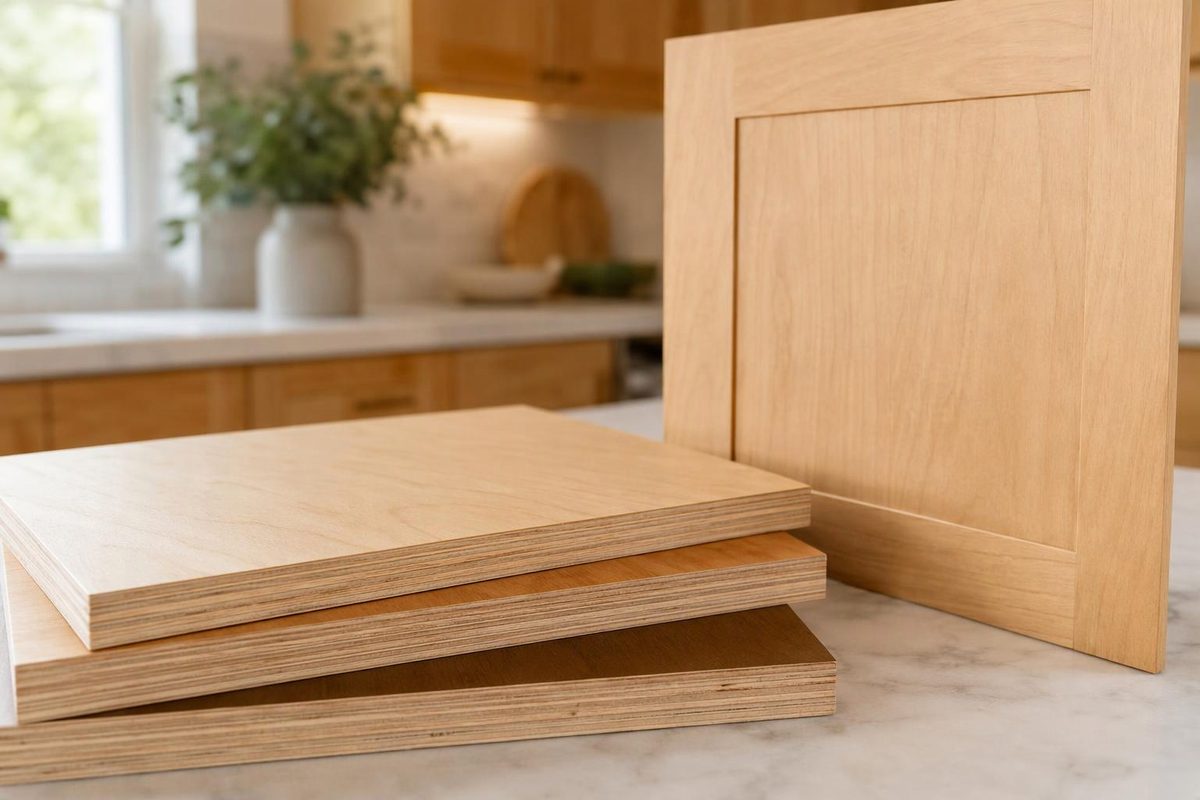
Alder plywood is a useful choice for visible cabinet panels when you want warm wood color and relatively quiet grain. One trade-off is its relatively soft wood surface: alder can dent, so it is not the first material to consider if resistance to knocks is your priority. The Wood Database describes red alder as generally straight-grained, fine-textured and rather soft, and lists veneer, plywood and cabinetry among its uses. The alder name alone, however, does not tell you how a panel is built.
For a cabinet purchase, judge three things separately: the alder appearance, the panel construction and the finished sample.
What alder plywood actually contains
Alder plywood generally means an engineered panel faced with thin, real alder veneer—not a sheet made entirely of alder. Decorative hardwood panels can have veneer, MDF or particleboard cores. Columbia’s 2021 alder product guide lists these constructions. That makes “alder plywood” an incomplete specification, especially if you expect a layered wood core.
Ask the cabinetmaker where the alder is used. Exposed cabinet ends, island panels and door panels are different from hidden box sides or interiors. An alder-faced end panel does not establish that the entire cabinet box has the same material.
For hidden components, assess the construction rather than paying for an appearance you will not see. Our guide to plywood cabinet upgrades covers the broader box-quality checks.
Clear-looking or rustic: specify the difference
Alder need not look knotty. Columbia’s alder product guide describes its veneer as having fine, light grain and honey-to-pale-brown hues, with little visible boundary between heartwood and sapwood. Within its own offering, A grade provides the cleanest, most uniform appearance; B grade includes a balanced amount of natural character; and rustic C grade has the greatest concentration of it. Those descriptions are manufacturer-specific, not a promise that every supplier’s alder will look identical.
Even an A-grade listing is not necessarily a promise of a completely featureless face. Sierra’s alder plywood guide notes that slight pin knots, burls and blending mineral streaks can be allowed.
Also check how the veneer pieces are arranged. Columbia describes alder as most commonly plank-matched, with limited bookmatching options. Sierra explains that bookmatching turns alternate veneer leaves over to create a mirrored pattern at the joint. A large island panel can therefore have a more deliberate pattern than the small door sample suggests.
If you want rustic alder, approve the extent of the character—not just the word “knotty.” Dura Supreme’s knotty-alder cabinetry description includes sound, open and split knots, sometimes with cracks that allow light through. That describes its cabinetry offering, not every alder plywood face, but it shows why the supplier’s acceptance criteria matter.
Stain is an option, not a guarantee of even color
Alder can take stain successfully, but uneven absorption needs attention. Minwax specifically names alder among the woods for which its pre-stain conditioner is especially useful to reduce streaking and blotching with oil-based stains. That is guidance for that finishing system, not a requirement to use the same conditioner under every factory finish.
Before ordering stained cabinets, request a finished alder veneer sample beside any solid alder used for door frames, trim or edge treatment. Inspect both under your kitchen lighting. This lets you judge whether the combination is acceptable instead of assuming that the same species and stain name guarantee a match.
For DIY work, follow the panel and finish manufacturers’ preparation instructions. Do not treat a thin veneer face like solid lumber; see our guide to sanding cabinet veneer.
If the cabinets will be painted, compare the maker’s standard paint substrate before paying for alder. The purchase case for alder is strongest when its natural appearance remains visible.
What to require in the quote
Before approving alder plywood, have the cabinetmaker identify:
- Location: which ends, panels, doors or box components receive alder.
- Construction: core type, finished thickness and material on the reverse face.
- Appearance: face grade, clear-looking or rustic character, and veneer matching.
- Edges and adjoining parts: the proposed edge treatment and any solid alder components.
- Finish: the approved stain or clear-finish sample, protective coating and sheen.
Choose alder because you like the finished wood—not because “hardwood plywood” sounds like a durability guarantee. For visible cabinetry, an approved sample and a complete construction specification are more useful than the species label alone.