
Choose Hickory Panels by Appearance and Cabinet Construction
Compare hickory plywood cores, veneer grades, color matching and edge treatments before approving cabinet doors, shelves, exposed ends or a material upgrade.
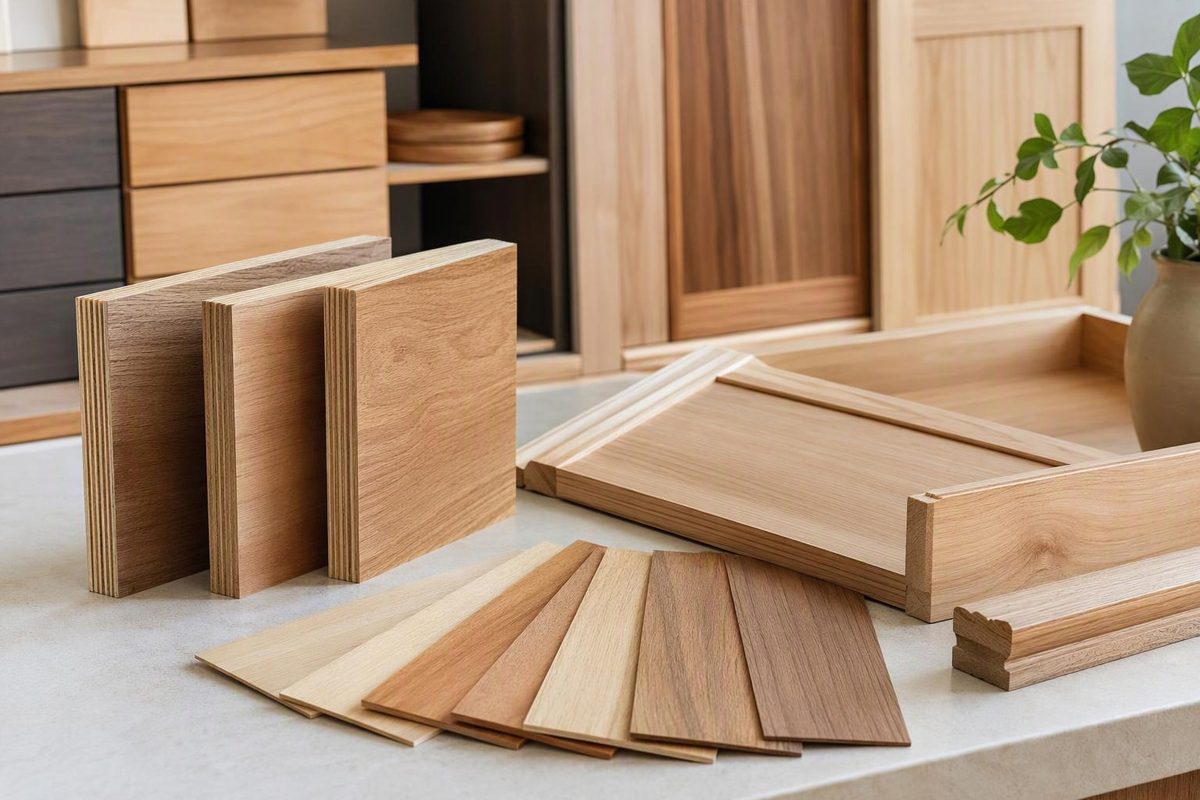
Hickory plywood is a good cabinet choice when you want real hickory grain and accept its natural color variation, but buy it by its face and core specifications—not the species name alone. “Hickory” identifies the decorative wood face, not necessarily the material inside the sheet. Hardwood plywood can have a veneer, MDF or particleboard core, so similar-looking hickory panels can differ in weight, machining and shelf performance. Sierra Forest Products describes these core options.
Separate the purchase into two decisions: whether the finished hickory appearance works across your kitchen, and whether each panel’s construction suits its assigned component. An attractive exposed end does not prove that the shelves or cabinet boxes have been upgraded.
Select the cabinet component and proposed core to see what the specification still needs.
Check the Proposed Panel
Core Not Specified
The hickory face does not establish shelf performance.
Ask for the manufacturer and core construction before comparing this panel with alternatives.
For this shelf, require thickness, unsupported span, intended load and the maker’s approval of the proposed assembly. A universal capacity is not available from these sources.
Sources: Columbia Forest Products’ Hardwood Plywood Core Guide; Sierra Forest Products’ rustic hickory panel description. This check identifies missing specifications, not a load rating.
Judge Hickory’s Color Range Across Several Panels
Hickory combines pale-yellow sapwood with heartwood ranging from light brown through reddish or gray-brown tones. Color streaks and rustic marks can also occur. Columbia Forest Products’ species guide identifies this range. Natural character is not automatically a defect, but it should fall within the appearance limits you agree with the cabinetmaker.
That contrast can be appealing on an island or a broad cabinet end. Across a full kitchen, it can also mean one door looks considerably lighter than its neighbor. If you want a quiet, uniform wood finish, do not approve hickory from one small, unusually even-colored sample. That sample establishes what one piece looks like, not the range you are agreeing to receive.
Ask to see several representative finished panels or doors together, including the lightest and darkest material the maker considers acceptable. Review them beside your counter and flooring samples. If all three surfaces have strong patterns, consider limiting hickory to one cabinet run or the island rather than distributing it throughout the room.
Make the sample review about placement as well as individual pieces. A light door beside a dark door may be acceptable to you; an isolated dark drawer front in an otherwise pale bank may not be. Ask whether the maker will coordinate neighboring fronts and what that coordination means. Do not leave “matching” to mean one thing to you and another to the shop.
The useful approval is a representative range, not a promise that every front will duplicate a favorite sample. Keep the agreed samples or photographs attached to the order, and identify which variations are acceptable. If the cabinetmaker cannot promise a narrow color range, decide whether you still want the material before production begins.
Specify Veneer Cut, Matching and Rustic Character Separately
Plain-sliced veneer generally produces a cathedral grain pattern. Plank matching deliberately combines differing veneer components to create a natural lumber effect rather than a uniform repeated pattern. Sierra also describes its rustic grade as allowing extensive natural character, including knots, bird peck and mineral streaks. Cut, matching and appearance grade describe different aspects of the face. Sierra’s hickory panel description explains these distinctions.
A quote that says only “rustic hickory plywood” leaves those choices unresolved. You might like pronounced color contrast but dislike visible knots, or prefer cathedral grain without a deliberately mixed plank appearance. Put those preferences into the specification rather than assuming the word “rustic” covers them.
“Higher grade” should not be interpreted as “all one color.” Columbia’s hickory panel library includes both A- and B-grade examples labeled natural or calico. A grade label is not a substitute for seeing the permitted color range.
Ask the cabinetmaker to identify the proposed face grade, cut and matching method, then show how those choices will look on the actual components. A broad end panel and a small drawer front provide different views of the same veneer pattern. Approve the appearance where it will be used, not just on a loose sheet sample.
Choose the Core for the Cabinet Component
Hickory’s hardness is not a substitute for a cabinet construction specification. For shelves and boxes, the species on the face does not establish the performance of the core or the finished component. Start with the component’s job, then evaluate the proposed panel.
| Core Specification | Buying Implication | What to Confirm |
|---|---|---|
| Veneer core | Relatively low weight and better spanning properties than MDF or particleboard in Columbia’s comparison | Thickness, span, load and face quality |
| MDF core | Smooth, void-free surface; particularly recommended for thin door inserts | Intended component and maker’s size limits |
| Combination core | Veneer inner plies with MDF or HDF crossbands balance strength and face smoothness | Exact construction and component suitability |
These distinctions come from Columbia’s Hardwood Plywood Core Guide. Its veneer-core comparison also identifies thickness variation and unevenness showing through the face as inspection points. Combination cores use veneer inner plies with MDF or HDF crossbands to combine veneer-core strength with a smoother surface beneath the decorative face.
For a long shelf, require the panel thickness, unsupported span and intended load rather than accepting “strong hickory plywood.” The sources here do not provide a universal shelf capacity or maximum span for hickory-faced panels. Without the complete shelf specification, a load rating would be guesswork.
Veneer core’s better spanning properties in Columbia’s comparison make it worth discussing for shelves, but that comparison does not approve every shelf made from it. Ask the cabinetmaker to confirm the proposed assembly for the actual span and contents. If supports or other construction details are part of that approval, they belong in the order as well.
MDF core deserves a similarly specific reading. Columbia particularly recommends it for thin cabinet door inserts; that is not a blanket recommendation for every shelf, full-size slab door or cabinet box. Its smooth surface can be useful for the veneer appearance without answering the structural question for an unrelated component.
For particleboard core, require the same component-specific information. Sierra’s inclusion of particleboard among possible core materials establishes that a hickory face need not mean an all-veneer panel. It does not provide a performance rating for the particleboard-core product in your quote. For a broader box-material comparison, see chipboard versus plywood cabinets.
Specify Doors, Exposed Ends and Shelves Independently
A hickory cabinet need not have the same construction everywhere. A recessed door panel can be veneer plywood rather than solid lumber: Horizon’s Square Veneer Panel door, for example, uses a 1/4-inch matching veneer-plywood center panel. Its solid-panel versions are listed separately. That is a specification for this door model, not a standard thickness for all hickory cabinet doors.
Ask what the door frame, center panel, drawer front and exposed cabinet end are each made from. “Hickory cabinets” can describe the visible appearance without telling you whether those parts are solid wood, veneered panels or a mixture. A component-by-component schedule makes the distinction clear.
For a slab door, require the maker’s complete panel and edge specification. Do not assume that a sheet suitable for an applied end panel is also approved for a door. Have the maker identify the core, thickness, back specification, finished dimensions and edge construction for the door being supplied.
An exposed end calls for a different conversation. Establish whether the hickory is the visible face of the cabinet side or an applied decorative panel. Then check the edges and its relationship to neighboring doors and trim. If the purchase changes only the appearance of that end, describe it that way rather than treating it as a cabinet-box upgrade.
Shelves need both appearance and service details. Confirm which surfaces will be visible, what happens at the front edge, and whether the shelf construction has been selected for the intended span and load. The decorative face and the shelf’s structural specification should be separate entries, even when they appear on the same purchase line.
Approve Edges and Solid-Wood Parts With the Plywood
Cut edges reveal the core. If you want a continuous hickory appearance, specify matching edge banding or solid-wood edging wherever an edge will remain visible, including shelf fronts. Do not assume that ordering hickory-faced plywood automatically includes a hickory-looking edge treatment.
Inspect a finished edge sample beside the face. Matching species alone is not your acceptance standard for color: an edge can be hickory yet fall outside the appearance you approved for the panel. Have the shop show the actual proposed treatment, including how it looks at corners and where it meets the face.
Also compare the finished plywood panel with any solid-hickory frames or trim. Approve them together, not as separate samples viewed on different visits. The relevant question is whether the assembled cabinet has an acceptable relationship between those parts, not whether each sample looks attractive by itself.
Use samples with the proposed finish system. Your approval should identify the finished appearance the maker is supplying, rather than leaving the relationship between an unfinished veneer sample and a finished solid-wood frame unresolved. If the finish changes during ordering, review the combined samples again.
If refinishing matters, request the face-veneer thickness and sanding guidance. Excessive sanding can remove the decorative face, a defect identified in Columbia’s grading guide. The sources here do not establish a universal veneer thickness or safe sanding allowance for hickory plywood. Get that information for the selected panel rather than borrowing guidance from a different product.
Put the Appearance and Construction in Separate Quote Lines
Before paying a hickory-material premium, get a quote that identifies where the material goes and what changes from the base cabinet specification. The draft sources do not provide a hickory plywood price or a standard cabinet upgrade premium. Ask for the actual difference in your order, with installation clearly included or excluded.
| Quote Item | Required Detail |
|---|---|
| Locations | Doors, exposed ends, interiors, shelves or applied panels |
| Panel construction | Manufacturer, core, thickness, face grade and back specification |
| Appearance | Veneer cut, matching, color range and permitted rustic character |
| Finished details | Edge treatment, finish system and coordinated samples |
Keep the price scope separate from those technical details. Ask the maker to distinguish the cost of the hickory appearance package from any cabinet-box upgrade. If one quote uses the same box construction with different visible surfaces and another changes both the faces and boxes, their totals are not pricing the same change.
Read substitutions the same way. A replacement panel that is still called hickory may preserve the species while changing the core, veneer matching or appearance range. Require approval of those changes against the original specification, not just confirmation that the substitute has a hickory face.
Before releasing the order, check that the approved samples, component schedule and price scope describe the same kitchen. The practical buying standard is straightforward: an agreed hickory appearance, a named panel construction for each use, and finished edges and solid-wood parts that have been reviewed together. If only exposed ends are changing to hickory, buy that as an appearance upgrade—not as evidence that the entire cabinet is better built.